
What is the AC Milan logo meaning? The heraldic seal of the Rossoneri devils
On a cold December night in 1899, Herbert Kilpin famously declared that his team would be "devils," choosing red to represent fire and black to invoke fear in all who dared to face them. This bold aesthetic choice has anchored the club's identity for more than a century, guiding them through eras of unparalleled success and tactical revolution.
While the crest has seen roughly a dozen transformations, ranging from starkly minimalist mascots to intricate city shields, it has always acted as a visual contract between the club and the city of Milan. Nowgoalmobile will explore how the AC Milan logo meaning serves as a bridge between the historical pride of Lombardy and the high-octane world of modern Champions League football, ensuring every supporter understands the weight of the stripes.
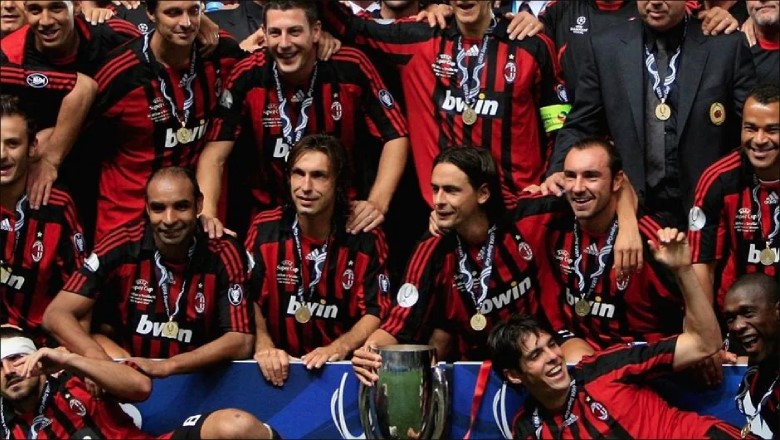
What is the AC Milan logo meaning?
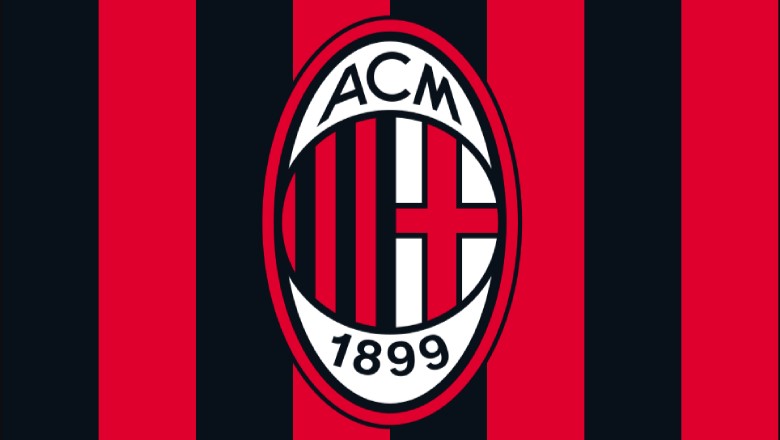
The current emblem is a masterclass in sophisticated oval branding, designed to balance the club's aggressive colors with the ancient heraldry of its home city. When fans look for the AC Milan logo meaning, they find a three-part visual narrative that perfectly captures the essence of the Rossoneri. The iconic red and black stripes, which fill the left half of the central circle, are a direct tribute to the "fire and fear" mantra established by the founders. These colors signify the burning passion of the players and the intimidating atmosphere they create for any opponent entering the San Siro.
Directly opposing the stripes on the right half of the circle is the St. George’s Cross, a red cross on a white background. It is important to note that this is not a reference to England, but rather the official coat of arms of the City of Milan, anchoring the club to its urban heritage. This entire symbolic core is enclosed in an elegant gold oval frame, topped with the "ACM" acronym and marked with the founding year "1899" at the base. This composition ensures that every time a player wears the jersey, they carry the fiery ambition of a devil and the historical weight of a city, making the AC Milan logo meaning a unique blend of sport and tradition.
The historical evolution of the AC Milan crest
1899-1916: The heraldic city shield
The inaugural logo was a traditional shield featuring the St. George’s Cross alongside the red and black stripes. This era was defined by the influence of the English founders, focusing on establishing the club as a competitive force in the early Italian football championships while proudly displaying the colors of the city.
1916-1946: Transition to circularity and war years
During this long period, the logo moved away from the shield toward various roundel formats. Between 1916 and 1920, the design featured a wreath-like border, while the 1930s saw the introduction of a gold-rimmed circle. Despite rearrangement of the stripes and cross to meet the stylistic trends of the interwar years, the red and black heart remained the one constant through social and sporting upheaval.
1946-1979: Post-war refinement and the first star
Following the war, the club adopted a more refined oval shape, coinciding with the arrival of the legendary "Gre-No-Li" trio. The logo became more balanced, with the "ACM" initials becoming a permanent fixture. A major milestone occurred in 1979 when Milan won their tenth Scudetto, earning the right to wear the golden star above their badge, which appeared alongside various shield and oval designs during the 1960s and 70s.
1979-1987: The era of the red devil
In a bold departure from tradition, the late 70s and 80s saw the club adopt a stylized, minimalist "Devil" mascot (known as Il Diavolo) as the primary crest. This aggressive graphic reflected the rebellious spirit of the era and the "Rossoneri" nickname. It remains a favorite for retro fans, representing a period of grit and transition before the club's global resurgence.
1987-2021: The Berlusconi renaissance and digital age
Following the takeover by Silvio Berlusconi, the logo returned to its classical oval roots with high-quality artistic refinements. This "Golden Age" under managers like Arrigo Sacchi and Fabio Capello saw Milan dominate the world. Minor adjustments were made in 1998 to sharpen the typography for the digital era, making the red and black stripes a global symbol of tactical perfection.
2021-present: The high-definition modern icon
The latest iteration, perfected in 2021, features cleaner lines, a more vibrant color saturation, and a modernized "1899" font. This version witnessed the recent return to Scudetto glory and represents the club's status as a global brand that blends its "devilish" history with high-intensity modern performance.
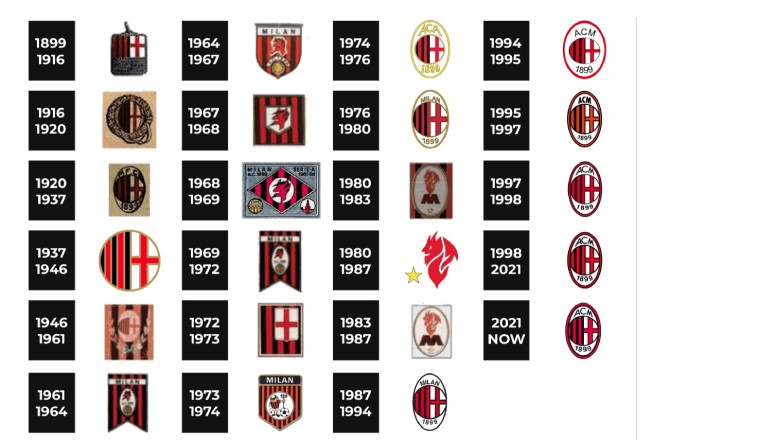
AC Milan logo evolution and history:
1899-1916: The original heraldic city shield
1916-1946: The experimental circular and interwar shields
1946-1979: The post-war oval and the debut of the golden star
1979-1987: The iconic stylized "Il Diavolo" mascot era
1987-2021: The classical oval refinement and digital update
2021-present: The current high-contrast global seal
Impact on club culture and global identity
The logo of AC Milan is a cultural powerhouse that bridges the gap between the gritty intensity of the San Siro and the high-fashion runways of the Quadrilatero della Moda. Locally, the crest is a badge of defiance against their rivals, a symbol of the "working class" roots of the club. Globally, the red and black stripes are a "seal of quality" that guarantees entertainment and European pedigree.
Whether it's a child in Milan or a supporter in Tokyo, the sight of the St. Ambrose cross alongside the Rossoneri stripes evokes the same feeling of watching footballing royalty. This identity has allowed Milan to transcend the sport, becoming a lifestyle brand that remains anchored in its century-old promise of fire and fear.
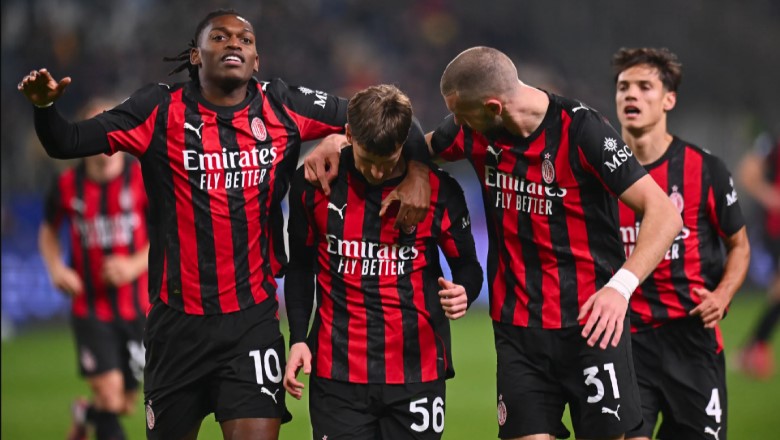
To fully grasp the AC Milan logo meaning is to understand a legacy that refuses to fade. From the early British influence to the modern-day digital icon, every line of the crest tells a story of a club that plays with a devilish heart and a city's pride. In this article, we have decoded every era of this legendary badge to show why the Rossoneri remain a beacon of excellence in the footballing world.
For those looking to capitalize on the Rossoneri's form as they hunt for their next title, having the right insights is crucial. Head over to nowgoalmobile.com right now to access expert analysis and the most precise football predictions, ensuring you have the edge on every matchday as the "Devils" take the field.
The Most Popular
-
 How many games in a La Liga season? Measuring the intensity of Spain’s most thrilling league
 -
 From iconic blue to global symbol: Discovering the France football team jersey history
 -
 5 Portugal biggest wins in football history: No Cristiano Ronaldo at the two greatest shows
 -
 Who scored the most goals against Arsenal? The Gunners' biggest tormentor once came through the club’s youth ranks
 -
 Top 10 players who played for both Liverpool and Barcelona: No.1 completed a historic treble, while the most expensive became a flop
 -
 The Egyptian King discovery: What position does Salah play for Liverpool?
 -
 How African countries qualify for World Cup? Ranking top 5 most frequent African participants at the final tournament
 -
 Why did Marcelo leave Real Madrid? The emotional farewell of a left-side legend
 -
 How much did Arsenal pay for Gabriel? Discovering the transfer of the North London red wall
 -
 How much did Barcelona pay for Dembele? Big-money move that turned into a nightmare at Camp Nou