
How many trophies does Xavi have? Get inside the great career of Xavi as both player and manager
Control is not always visible in football, but when it appears consistently over years, it begins to define entire teams. Xavi’s career sits exactly in that space, where matches slow down, decisions become precise, and outcomes start to feel inevitable. His influence was not based on physical dominance or explosive moments, but on the ability to dictate how the game unfolds.
This article by nowgoalmobile breaks down Xavi’s complete trophy collection across both his playing and managerial career. But beyond numbers, the focus is on the systems he operated in, the matches he controlled, and the eras he helped define. Because Xavi’s trophies are deeply connected to a style of football that reshaped modern tactics.
From Barcelona’s golden era to Spain’s international dominance, and later his transition into management, each phase adds another layer to his trophy count. Understanding that number requires understanding how those teams functioned with him at the center.
How many trophies does Xavi have?
Xavi Hernandez has won a total of 34 trophies in his senior professional career, combining both his time as a player and as a manager (As a player: 28 trophies; As a manager: 6 trophies)
This total reflects success across multiple levels, club football, international tournaments, and managerial achievements, making him one of the most decorated figures in modern football.

Barcelona era: the system that changed football
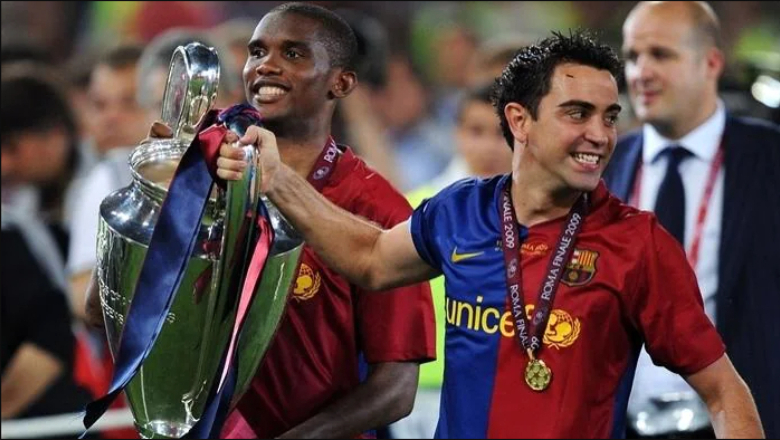
The most defining chapter of Xavi’s career came in Barcelona, where he won 25 trophies and became the central figure in one of the most dominant teams ever assembled.
Matches were not rushed, they were controlled. Possession was not just a statistic, it was a weapon. In the 2009 Champions League final against Manchester United, Barcelona dictated the tempo from the first minute. Xavi’s passing rhythm ensured that United rarely touched the ball in dangerous areas.
That same pattern repeated in the 2011 final, again against Manchester United. Barcelona’s midfield, led by Xavi, completely controlled the match. Every pass had purpose, every movement created space, and the game unfolded exactly as they intended.
Across La Liga campaigns, this control translated into consistency. Barcelona did not just win titles, they dominated entire seasons, often finishing with clear margins. Xavi’s role was not always visible in goals or assists, but it was present in every sequence of play.
Spain national team: dominance on the international stage
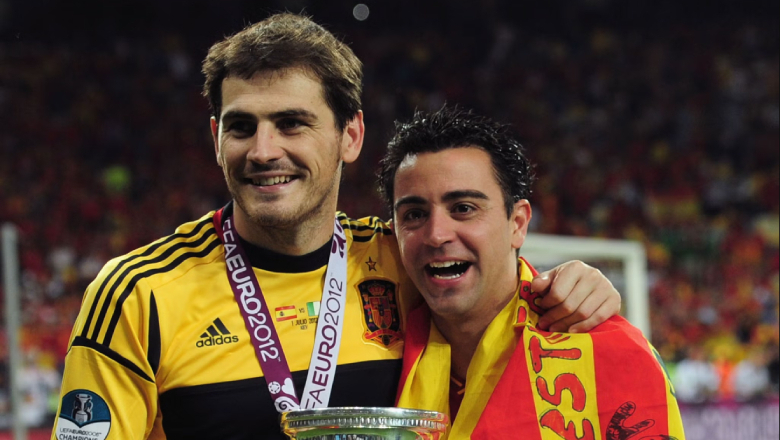
International tournaments are often unpredictable, but during Spain’s golden era, control replaced uncertainty. Xavi played a central role in a team that won the 2008 European Championship, the 2010 World Cup, and the 2012 European Championship.
In the Euro 2012 final against Italy, Spain delivered one of the most dominant performances in international football history, winning 4-0. Xavi controlled the tempo throughout the match, dictating play and creating space for attacking movements.
At the 2010 World Cup, Spain’s approach remained consistent. Matches were often tight, but control ensured that opponents had limited opportunities. The final against the Netherlands followed the same pattern, with Spain maintaining structure until the decisive moment arrived.
These tournaments highlighted Xavi’s ability to translate club-level control into international success, something very few players achieve.
Al Sadd and transition into management
Moving to Al Sadd, Xavi entered a different phase of his career. As a player, he continued to win titles, adding domestic trophies in Qatar while adapting his style to a new environment.
As a manager, his philosophy remained unchanged. At Al Sadd, he implemented the same principles that defined his playing career, positional play, control, and structured buildup. This approach led to multiple trophies, including league titles and domestic cups.
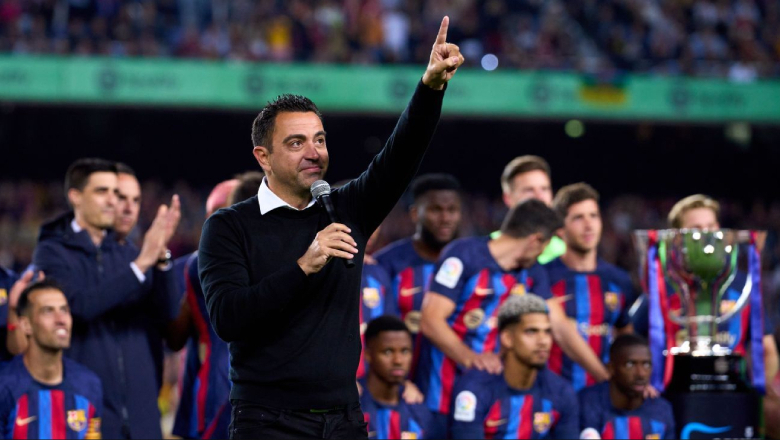
Returning to Barcelona as a manager, he achieved immediate success by winning La Liga and the Spanish Super Cup. These trophies reflected his ability to translate his understanding of the game into a new role.
Across his 34 trophies, a clear pattern emerges. Xavi’s success is not built on moments of chaos, but on sustained control. His teams do not rely on sudden bursts, they dominate through structure and precision.
This consistency, repeated across different teams and competitions, defines his legacy. Whether as a player or a manager, the outcome remains the same, control leads to success.
Xavi total trophies over his career:
34 titles, including:
FC Barcelona: 25 titles (La Liga: 2004/05, 2005/06, 2008/09, 2009/10, 2010/11, 2012/13, 2014/15, 2015/16; UEFA Champions League: 2005/06, 2008/09, 2010/11, 2014/15; Copa del Rey: 2008/09, 2011/12, 2014/15; Supercopa de España: 2005, 2006, 2009, 2010, 2011, 2013; UEFA Super Cup: 2009, 2011; FIFA Club World Cup: 2009, 2011)
Spain national team: 3 titles (FIFA World Cup: 2010; UEFA Euro: 2008, 2012)
Al Sadd (player): 6 titles (Qatar Stars League: 2018/19; Qatar Cup: 2020; Emir of Qatar Cup: 2020; Sheikh Jassim Cup: 2017; additional domestic cups)
Al Sadd (manager): 7 titles (Qatar Stars League: 2020/21, 2021/22; Qatar Cup: 2021; Emir of Qatar Cup: 2020, 2021; Qatari League Cup: 2020/21; Sheikh Jassim Cup: 2019)
FC Barcelona (manager): 2 titles (La Liga: 2022/23; Supercopa de España: 2022/23)
Looking at how many trophies does Xavi have, the number 34 reflects a career that shaped how football is played at the highest level.
In the context of upcoming schedules, his influence continues to evolve. Whether on the pitch or on the sidelines, his understanding of the game remains centered on control, precision, and the ability to dictate outcomes over time.
For fans who want to stay updated with upcoming schedules, explore football predictions, and follow football results across every major competition, visit nowgoalmobile.com to experience a complete football platform built for real-time insights and global coverage.
The Most Popular
-
 How many games in a La Liga season? Measuring the intensity of Spain’s most thrilling league
 -
 From iconic blue to global symbol: Discovering the France football team jersey history
 -
 5 Portugal biggest wins in football history: No Cristiano Ronaldo at the two greatest shows
 -
 Who scored the most goals against Arsenal? The Gunners' biggest tormentor once came through the club’s youth ranks
 -
 Top 10 players who played for both Liverpool and Barcelona: No.1 completed a historic treble, while the most expensive became a flop
 -
 The Egyptian King discovery: What position does Salah play for Liverpool?
 -
 How African countries qualify for World Cup? Ranking top 5 most frequent African participants at the final tournament
 -
 Why did Marcelo leave Real Madrid? The emotional farewell of a left-side legend
 -
 How much did Arsenal pay for Gabriel? Discovering the transfer of the North London red wall
 -
 How much did Barcelona pay for Dembele? Big-money move that turned into a nightmare at Camp Nou